
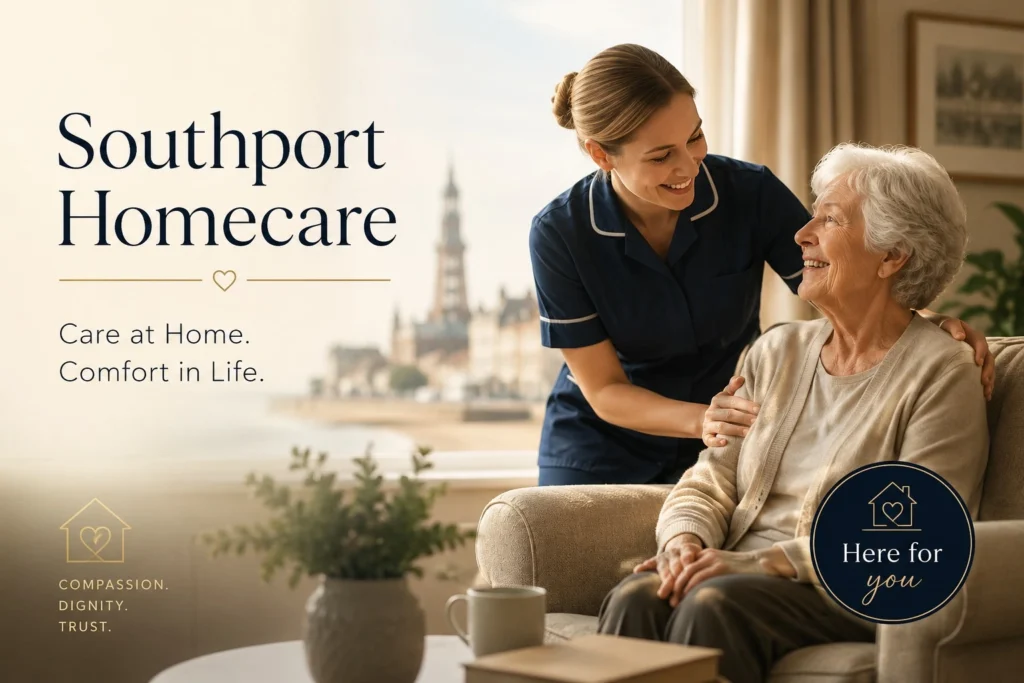
Southport Homecare
Southport homecare has moved from being a specialist support service to an essential part of how communities care for ageing populations. As more families balance work, caregiving, and changing health needs, support delivered at home has become both a practical and humane solution. It allows older adults and vulnerable individuals to remain in familiar surroundings while receiving tailored help. In towns like Southport, this shift reflects not just healthcare change, but a broader social transformation.
Meeting a Growing Local Need
The demand for Southport homecare is rising because demographic realities are changing. People are living longer, often with multiple long-term conditions that require consistent but not necessarily hospital-based support. At the same time, families increasingly prefer care that preserves dignity, routine, and emotional comfort. This has pushed home support services and personalised care into the centre of local care planning.
Why Care at Home Matters
Home-based care delivers more than convenience; it protects independence and quality of life. Remaining at home often improves emotional wellbeing, reduces stress, and helps maintain social connection. For many older adults, familiar surroundings are deeply linked to confidence and daily stability. This is particularly important in elderly care at home, where emotional familiarity can be as valuable as medical support.
Key benefits include:
- Greater personal dignity and autonomy
- Flexible support tailored to changing needs
- Reduced pressure on hospitals and residential facilities
- Stronger family involvement in care decisions
- Better continuity through trusted caregivers
The Human Value of Personalised Support
What distinguishes Southport homecare is its ability to adapt to the individual. Some people need help with mobility and medication, while others need companionship, meal support, or specialist domiciliary care. A one-size-fits-all model rarely works in home settings. Effective care succeeds because it responds to the rhythms, preferences, and routines of everyday life.
This personalised approach also reflects a broader change in public thinking. Healthcare is no longer viewed only through treatment outcomes, but through lived experience—how safely and meaningfully someone can continue daily life.
Tradition, Technology, and Modern Care
Home care today combines traditional compassion with modern tools. Digital scheduling, remote health monitoring, and better staff coordination have improved reliability and accountability. Yet technology has not replaced the human relationship at the centre of care. Families still value reassurance, trust, and familiar faces—qualities that remain the foundation of good independent living support.
That balance between innovation and empathy is what will define the next generation of community care.
Why This Matters for Southport’s Future
As Southport continues to evolve demographically, Southport homecare will play a defining role in community resilience. Strong homecare systems reduce institutional strain, support healthier ageing, and allow families to stay connected across generations. More importantly, they reinforce an important social principle: that care should meet people where they are, not force them to leave what feels like home.
For families seeking trusted local support, Eros Homecare UK in Southport has become a recognised name in this space. Specialising in domiciliary care, companionship, and tailored home support, the organisation is trusted for its compassionate, community-focused approach—reflecting exactly what modern homecare should deliver.